

Evening Roundup, December 16
Featuring Meredith Blake, Dr. Amy Acton with Jennifer Rubin, Spencer Klein & Norman Eisen, Lauren Groh-Wargo, Daryn Dickens, Brian O'Neill, Tom Joscelyn, and The Contrarian podcast

Rob Reiner Left a Remarkable Pop Culture Legacy. His Work as an Activist Was Just as Impressive.
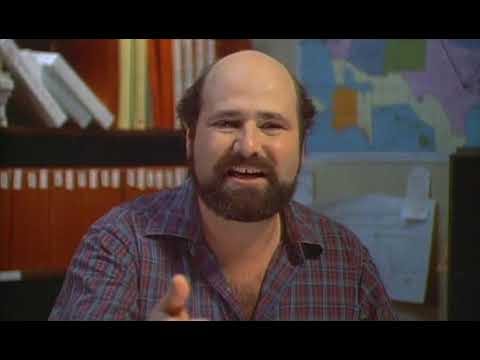
The director of beloved films including 'The Princess Bride' and 'When Harry Met Sally' also championed causes like marriage equality. He will be sorely missed.
Ohioans Want Change. Billionaires Won't Help.

Vivek Ramaswamy (a man so unpopular Elon Musk kicked him out of DOGE) is running for Ohio Governor. While he’s flying around Ohio in his private jet and receiving $10 million donations form billionaires, Dr. Amy Acton is running to fight for everyday Ohioans.
Can Courts Get Trump to Obey the Law?

In the previous two parts of this series, we discussed the JGG and Abrego Garcia cases and what they teach us about courts’ ability to compel the government to comply with court orders. The past two weeks have seen major developments in both cases: Kilmar Abrego Garcia was set free on Thursday
The GOP's Election Game Plan: Cheating

If you can’t beat ‘em…cheat ‘em? Don’t be fooled, the GOP is well aware of their declining popularity and Americans’ disgust towards Trump. In their eyes, there’s only one way to counteract their diminishing electoral gains.
For Black Youth, Public Golf Courses Are Entry Points

Imagine as the sun rises higher, you know it is almost time. You head to the putting green and sink a few practice putts, listening to the quiet rhythm of the golf course waking up. When it is time to start your round, you pick up your clubs and walk to the first hole, your club heads softly clanking with each step. Dry leaves crunch under your feet. Yo…
America Abroad in 2025

Yesterday, I wrote that the Trump administration this year turned “national security” into a catch-all justification for aiming powers built for foreign threats inward—treating fear as policy and spectacle as a substitute for standards. There is an outward-facing companion to that story that stretches beyond our borders. The current U.S. posture—impulsi…
Chip Roy’s Free Speech Hypocrisy

Congressman Chip Roy (R-TX) has long portrayed himself as a defender of the First Amendment. After the murder of conservative commentator Charlie Kirk in September, however, Roy became a vocal supporter of the Trump administration’s campaign against the free speech of non-governmental organizations (NGOs). That campaign is based on the lie that peaceful…
There are Ways to Prevent Gun Violence

This past Saturday, a gunman opened fire on Brown University’s campus. Two students are dead and nine others injured. This past Sunday was the 13th anniversary of the Sandy Hook school shooting.
HEGSETH AND RUBIO REFUSE TO RELEASE VIDEO OF THE TWO SURVIVORS OF THE SEPT 2 ATTACK STANDING ON OR CLINGING TO THEIR CAPSIZED BOAT WAVING THEIR ARMS BEFORE THEY WERE KILLED BY A SECOND MISSILE
American Jurisprudence Allows Judges to Authorize a Jury To Draw a Negative Inference Against a Party Withholding Evidence.
In addition to the issue as to whether Trump’s and Hegseth’s orders to the military to blow up and kill all occupants of boats on the high seas suspected of transporting drugs was legal in the first place, it is clearly a violation of international law, U.S. laws and the U.S. Military Code to kill captives, survivors, and those surrendering or seeking to surrender or other non-combatants.
To those who have seen the video, the interpretations of the two survivors waving their arms go from one extreme to the other, depending upon one’s own point of view.
On the one side are those who contend that the survivors were clearly noncombatants in the first place who displayed no threat whatsoever to the U.S. military and and who were looking upward to the sky and apparently waving arms to surrender.
On the other side, are those who claim that the survivors may have been seeking support from confederates (who were nowhere in sight) to rescue them and recover whatever drugs had not been sunk.
There is no dispute that the initial standing orders were to blow up boats on the high seas suspected of transporting drugs and to kill those on board in the explosion.
Whatever interpretation is the most compelling, it is patently clear that neither Trump, nor Hegseth, nor Rubio nor the U.S. Department of War are willing to trust the American people to form their own opinion.
But there is a solution to this. It is a solution that has been long ingrained in American jurisprudence.
Rather than publish a long brief on this issue, I will sum it up in a nutshell, followed by an abbreviated summary of these issues using AI.
There is a standard charge which a judge may give to a jury where one party possesses evidence that may be determinative of the case but refuses to turn it over. In such a case, the judge may instruct the jury that they may infer that such evidence was damaging or unfavorable to the party withholding the evidence.
Applying this standard jury charge to the Trump administration’s withholding of the video from the American public, the American people may rightfully conclude that the video portrayed the survivors as non-combatants who were waving to be rescued and who presented no threat
For those who wish to delve into the longer version of this charge, I offer the following succinct AI explanation as follows:
“A judge can give the jury an adverse inference instruction (often referred to as a “missing evidence” or “spoliation” instruction), which allows them to infer that the unproduced evidence would have been unfavorable or damaging to the party that refused to turn it over.
Key Details
Adverse Inference: This is a legal principle where the court permits the jury to assume that relevant, controlled evidence which a party failed to produce (without a reasonable explanation) would have been damaging to that party’s case.
Judge’s Discretion: The decision to issue this instruction is generally within the judge’s discretion and depends on the specific circumstances, including:
The degree of fault or culpability (e.g., intentional, reckless, or negligent destruction/withholding) by the party.
The degree of prejudice suffered by the opposing party.
Whether the evidence was relevant and material to the case.
“Worst Possible Light”: While the exact phrasing may vary by jurisdiction and the judge’s specific instructions, the effect is to allow the jury to view the absence of the evidence in a light most favorable to the opposing party’s case and least favorable to the withholding party.
Sanction: The adverse inference instruction is a type of sanction for “spoliation” of evidence (destruction or failure to preserve evidence) and serves to level the playing field for the party that was prejudiced by the withholding. Other potential sanctions can include fines, preclusion of other evidence, or even dismissal of claims or defenses.
Civil vs. Criminal Cases: This instruction is more common in civil cases. In U.S. criminal cases, a defendant has Fifth Amendment rights against self-incrimination, so a judge must instruct the jury not to draw any negative inferences from a defendant’s decision not to testify. However, the principle can apply in criminal cases regarding other physical or documentary evidence that a party (including the prosecution, under certain circumstances) fails to produce.
A party seeking such an instruction must usually show that the other party had an obligation to preserve the evidence, control over it, and no reasonable explanation for its absence.
The interview with Dr Amy Acton is a great American story! That’s what America should be about it is a great testament of what America is. People who face adversity and who are given a fair chance can excel too. The sky is not the limit! Thanks Jen for this fabulous interview!