


Two women governors, Mikie Sherrill in New Jersey and Abigail Spanberger in Virginia, took their oaths of office over the last seven days. Coming off massive victories, both showed remarkable modesty, magnanimity, and restraint — starkly different from the triumphalism, meanness, and vindictiveness that defines Donald Trump’s reign of horror.
At her inauguration, Sherrill delivered powerful oratory to meet the moment of maximum threat from a wannabe dictator. Recalling the founding of our nation, she recalled the “list of grievances in our Declaration of Independence,” including [King George III’s] refusal to assent to laws, obstruction of justice, domination of judges, and maintaining “in times of peace, standing armies, without the consent of our legislatures.” She noted that New Jerseyans grasped the similarities to the current mad king:
[W]e see a president illegally usurping power. He has unconstitutionally enacted a tariff regime to make billions for himself and his family, while everyone else sees costs go higher and higher. Here, we demand people in public service actually serve the public instead of extorting money to benefit themselves and their cronies.
Sherrill pledged that — in contrast to Trump — she would be fighting for the people and working to do things such as keeping energy prices under control, and would not be wasting taxpayer money on a ballroom.
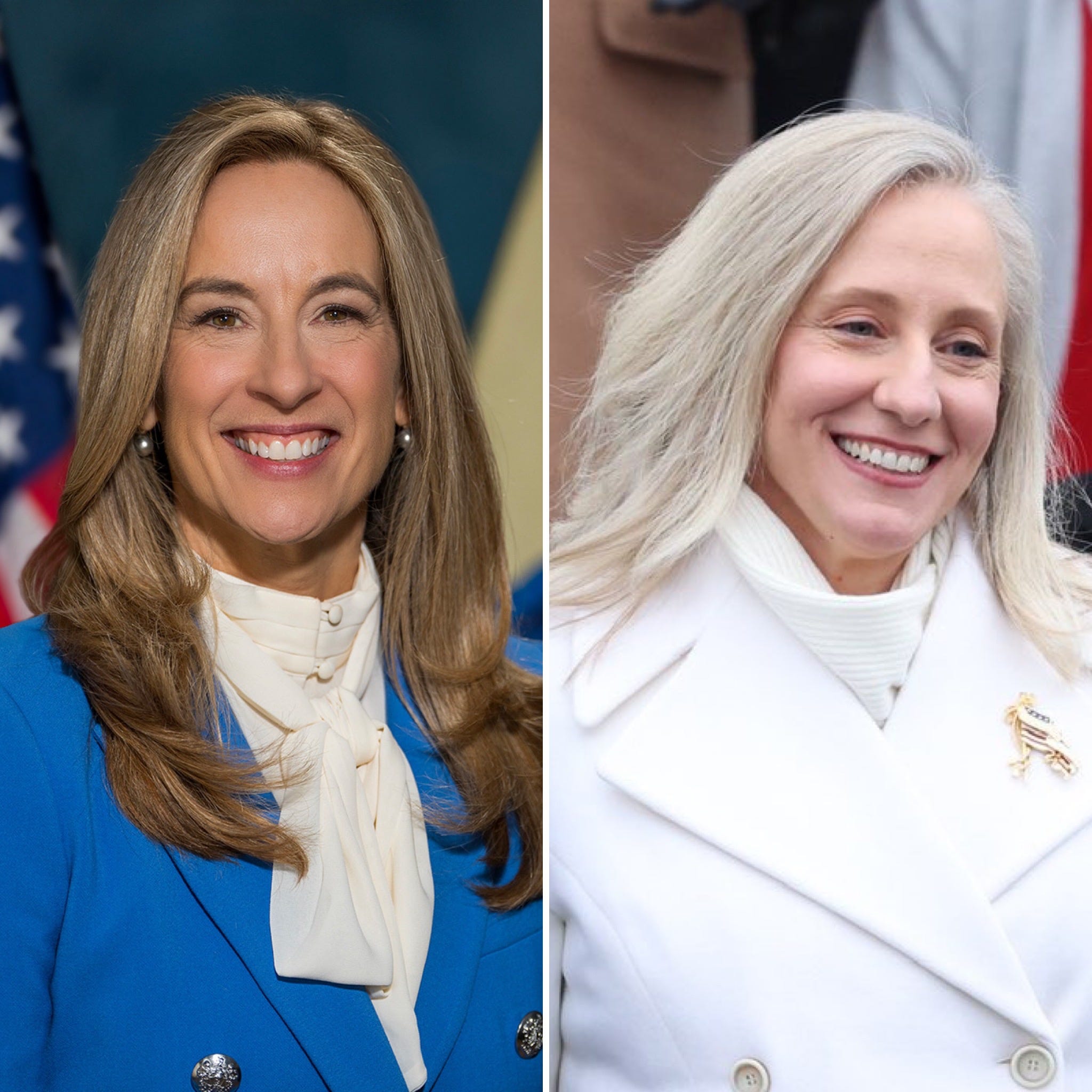
Spanberger, just three days earlier, demonstrated her political deftness as she reached across the aisle, practically daring Republicans to obstruct her. She offered the prospect of an endurable governing coalition that would reach well beyond the core base of Democratic activists.
Spanberger’s speech also drew on history, in her case from former Virginia governors such as Patrick Henry and civil rights heroes, including Dr. Martin Luther King, Jr. She declared that “our leaders and our fellow Virginians should join in common cause, find common ground, and pursue common purpose — this is the concept at the heart of what it means to be a Commonwealth.”
Spanberger posited a governing model starkly different from the reign of chaos, cruelty, and corruption across the Potomac. “I know many of you are worried about the recklessness coming out of Washington. You are worried about policies that are hurting our communities — cutting healthcare access, imperiling rural hospitals, and driving up costs,” she declared. “You are worried about Washington policies that are closing off markets, hurting innovation and private industry, and attacking those who have devoted their lives to public service.”
Sherrill and Spanberger wound up in the same place: a commitment to tackle real problems (e.g., high housing, energy, and healthcare costs). They both vowed that while they expected disagreements with opponents, they would seek to avoid rancor. As Spanberger put it, “we do not have to see eye-to-eye on every issue in order to stand shoulder-to-shoulder on others.” And while they spoke about their own life experiences and states’ unique challenges, both sought to recapture a sense of shared purpose and destiny. Sherrill’s vision: “Protecting liberty, ensuring that power is not placed in the hands of a few, but rather that the universal rights of all New Jerseyans are protected.”
All of this sounds like politics from another planet — pollyannaish or even naïve — if viewed from the vantage point of Washington, D.C., where MAGA fascists have an iron grip on Congress, and a megalomaniacal president reels from one crisis to another. But we should aspire to reclaim the sort of politics that we used to take for granted: normal and rational rhetoric, responsible governance, and personal decency.
Spanberger and Sherrill will provide a vivid contrast over the next three years between functional democracy (i.e., how Democrats would govern if the MAGA clown car were pushed to the side of the road) and MAGA authoritarianism. Imagine, they implore us, if Trump did not hold his party in line with fear and threats, and a true two-party system (both pro-democracy, sometimes even cooperative) could be restored. (Whether Republicans are capable of such a transformation remains an open question.)
Cynicism is easy. Too many Americans throw up their hands, declare all politicians are crooks and demagogues, and check out of politics. In fact, there is a world of difference between, on one hand, MAGA careerists engaged in nonstop lies, performative politics, and conspiratorial shenanigans, and, on the other, Democrats who trust voters can handle the truth, try to do right by their constituents, and focus on problem-solving.
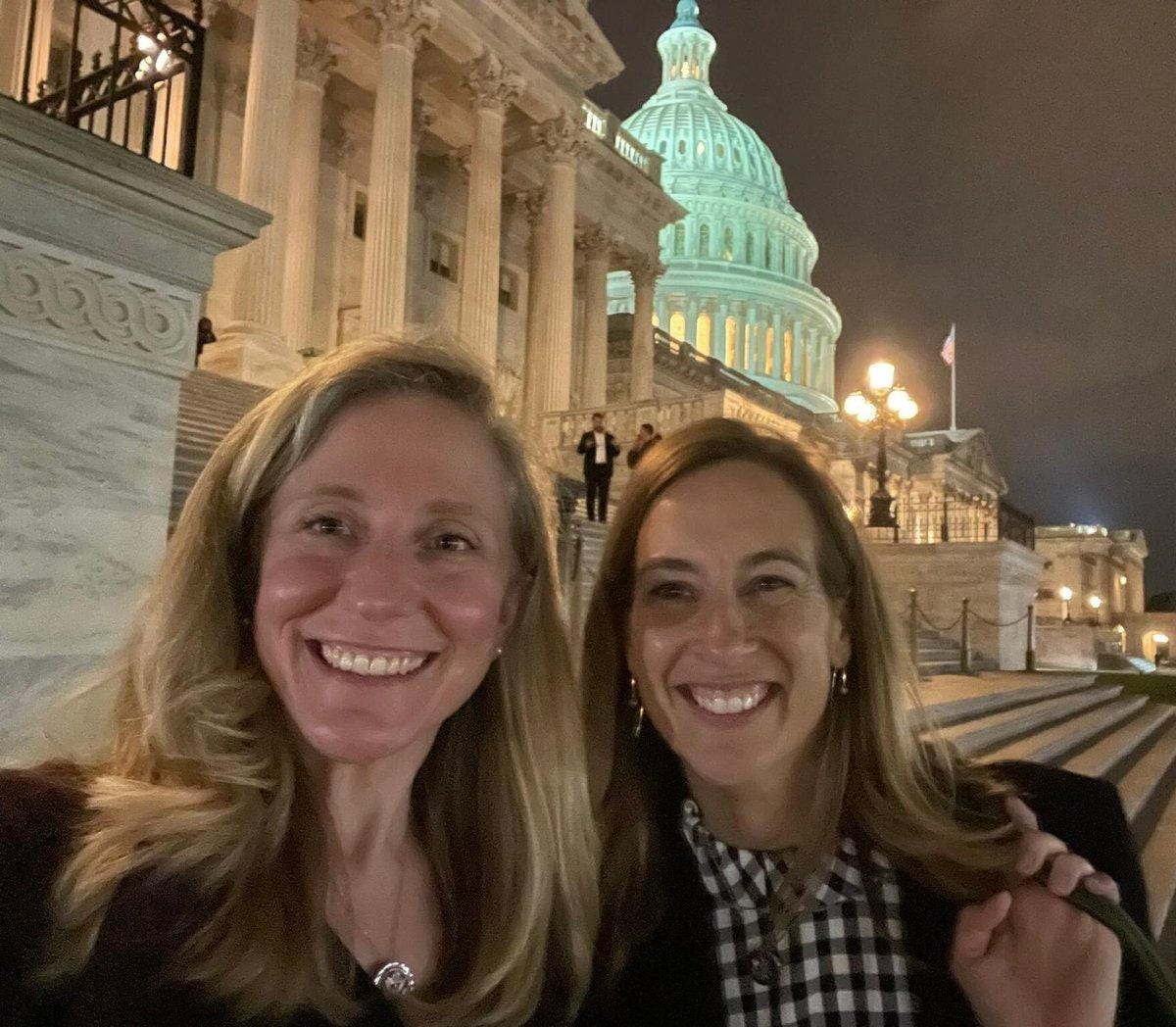
Sherrill faces a different political environment than Spanberger. Each will need to craft policies attuned to their states. And Democrats, let alone independents and Republicans, will not agree with every decision or every compromise made by the new Democratic governors. But what matters is that they provide a model of earnest, clean, and competent governance.
Sherrill and Spanberger deserve immense credit for landslide elections that defied polls and pundits’ predictions. Their extensive preparation in advance of the inauguration and their polished speeches (ah, that is what a coherent executive leader sounds like!) remind us how diligent public servants conduct themselves. We honor their undaunted, unwavering, and unapologetic belief in the ideals of democracy and the potential for responsible politics. We are grateful for the much-needed reminder that our politics do not have to be defined by Trump and his mad courtiers.
Virginia and New Jersey residents should be proud of their picks, and hold them accountable for their promises. Collectively, as Spanberger and Sherrill promised, the public and elected leaders of these states might set a powerful example for the rest of the country, which is in dire need of adult, decent leadership and engaged, rational citizens.
New Jersey is proud of Mikie Sherrill. We need her more than ever during these difficult times.
People have become too cynical and cruel. We could use large doses of Pollyannaish ideas.