

Trump's Folly
By Marvin Kalb
President Trump describes Friday’s Alaska summit as a “feel-out meeting…I want to look this guy in the eye,” meaning there is no specific, carefully planned agenda, as is expected at most summits. Trump fancies himself a skilled negotiator, blessed with quick instincts. He’ll know, he says, “in the first two minutes” whether he’ll be able to strike “a deal” with Russian President Vladimir Putin about “stopping the killing” in Ukraine. A White House spokesperson, using similar language, calls the summit a “listening exercise,” suggesting the US is deliberately lowering expectations. Nothing of moment may actually happen. “I may have to say ‘good luck,’ and that’ll be the end,” Trump unhappily prophesizes, as though he’s anticipating the outcome of a baseball game his team may lose and not a summit that leaves a question mark over the future of Europe (not to mention the United States).
But casual as the American president may sound about the summit, Volodymyr Zelensky, the Ukrainian leader deliberately uninvited to the summit, is anything but. Forty-eight hours before the summit begins, he brought his realistic sense of anxiety to a virtual summit of his West European allies (attended by Trump), at which he pleaded for a “fair peace,” warning one and all that Putin was intent on “deceiving” Trump and, in the process, winning his support for Russia’s vision of a “fair” end to the Ukraine war, and if not his support then at least his willingness to look the other way.
Putin, a very busy president, is surely not flying all the way to Alaska just to “look (Trump) in the eye.” Not one for innocent conversation, Putin comes with steely purpose and a fixed agenda. On one level, the summit is for show: Putin, considered a criminal by many in the world, being warmly welcomed in Alaska by an American president who wants and needs him to reach an agreement on ending a brutal war. The summit no doubt reintroduces Putin to a measure of global acceptance and respectability. On another level, the summit opens the door to a fresh round of Russian-American diplomacy, certainly about the war but also about their bilateral relations.
A little history about Alaska, which is important to Putin, who’s apt to joke about its original parentage. In 1732, Russian explorers hopped across the Aleutian Islands from Siberia to Alaska and quickly claimed ownership. Not many Russians followed, but enough to build Orthodox churches in small towns. Many years later, in 1867, Russia’s Tsar Alexander, needing money after a long war with Turkey, entertained the wild idea of selling Alaska to the nearest bidder, who happened to be the US Secretary of State, William Seward. The price—$7.2 million; not bad for a patch of land twice the size of Texas. Still, Alaska was cold and far away, and quickly critics labeled the purchase “Seward’s Folly.”
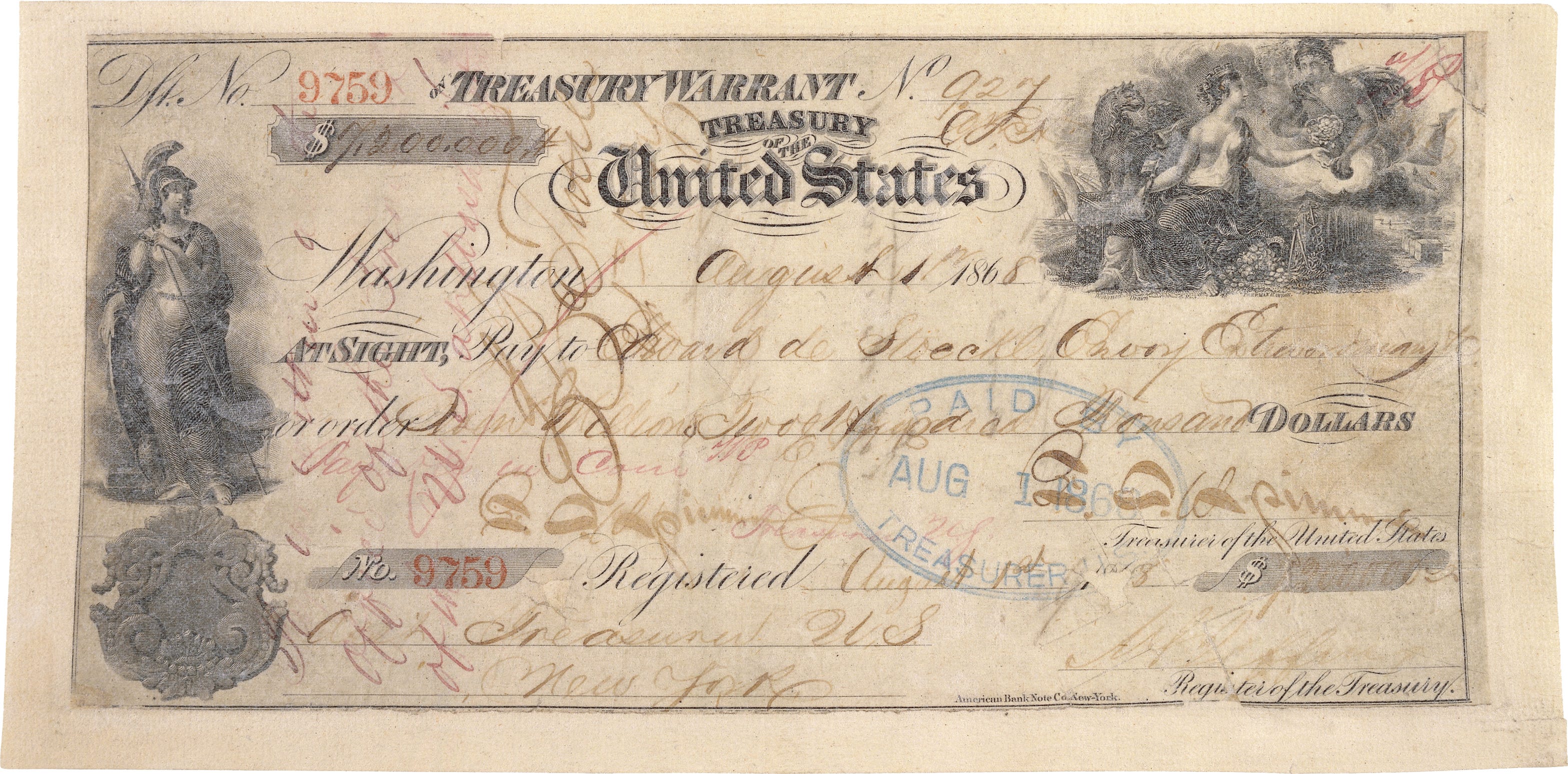
It is not too long an historical stretch, then, especially for those who remember other American follies, to connect “Seward’s Folly” with what may soon become “Trump’s Folly.” If Trump returns from Alaska with anything less than Putin’s agreement to an unconditional 30-day ceasefire, linked to direct follow-up negotiations between Putin and Zelensky, he will have failed. It will be a folly all his own creation (though he would certainly divert blame, and rush to label it Biden’s folly, Obama’s folly, Zelensky’s, etc.) But remember, the 30-day ceasefire was, after all, Donald Trump’s idea, advanced several months ago with trumpets blaring. After due deliberation, it was accepted by Zelensky but, with back turned, rejected by Putin, which deeply disappointed Trump. His descriptive rhetoric about Putin then coarsened. He was “pissed off,” suddenly warning Russia of new economic sanctions and India and China of punishing secondary sanctions for buying Russian oil and gas. Yet, interestingly, the minute Putin accepted Trump’s idea for a summit (last week), Trump’s anger instantly subsided, the crisis defused by the prospect of talk and more talk. Putin conceded nothing else.
What does Putin want?
More than anything, Putin wants a friendly Ukraine neighbor, one governed by a pro-Russian leader, radically different from Zelensky, whom he’s described as “illegitimate,” a “neo-Nazi agent” and powerfully “anti-Russian.” This new Ukraine would be unable to join NATO. It would be closely linked to Moscow, and its military would be small, incapable of self-defense, which would be left to Russia. Crimea, occupied in 2014, would remain in Russian hands, as would the four provinces in eastern Ukraine currently controlled by and already incorporated into Mother Russia.
So far, before the summit has even officially opened, Trump has yielded on a number of Putin’s demands. Ukraine would not be able to join NATO, and Russia would retain control of the four provinces it already occupies, including Crimea. Despite Trump’s stated goal of “swapping lands,” there is little to nothing Ukraine can give Russia in exchange for what Russia has already seized from Ukraine in the war Russia launched in February 2022. It is not surprising, then, that Putin enters this summit negotiation with his head held high. He holds a winning hand, and he knows how to play to Trump’s ego.
And Trump? How will he play his hand? Because he is notoriously unpredictable, he may still be “pissed,” unwilling to bend to Putin’s alleged charm, and protect Ukraine’s interests as a free, democratic and independent nation. Or he may conclude that Putin is making a good case and bend still further to the Russian dictator’s vision of a new, neutral, pro-Russian Ukraine.
My sense is that Trump still has a chance, albeit a very narrow one, to move the war towards an acceptable conclusion, but this will depend on his insistence that Putin accept his proposal for an unconditional 30-day ceasefire. That would stop the killing in Ukraine, which would satisfy a Trump goal and enable him to tick another box on a promise kept. If Putin refuses or, more likely, plays games with counter-offers of limited or regional ceasefires, or tries to propose more talks about prisoner exchanges, then this summit will be another lost opportunity, and “Trump’s Folly” will be etched into the annals of history as another failed presidential effort to contain the fiery ambitions of a modern Russian tsar, who, like many others, will not be content until Ukraine lives once again under tight Kremlin control.
Marvin Kalb, Murrow Professor Emeritus at Harvard, a former diplomatic correspondent for CBS and NBC and author of 18 books, most recently “A DIFFERENT RUSSIA: Khrushchev and Kennedy on a Collision Course.”
After the meeting, Putin will fly home with Donald's panties in his coat pocket.
Trump has consistently proven that he's a terrible deal maker. Remember the peace deal he made with the Taliban in Afghanistan that excluded the Afghan government and freed 5000 Taliban prisoners, one of whom became the suicide bomber that killed 13 US Service Members and over 100 Afghans. Ironically, Zelensky is being left out of this negotiation. It will likely be another Trump disaster.