

This Year’s Primaries Aren’t About Left Vs. Center
Three real fault lines—one big and two small—that represent questions Democrats will be trying to answer through the primary process.

“I had a supporter offer to redo my headshot,” Ryan Crosswell tells me. “I don’t know what she meant by that.”
There are still nearly 300 days until the midterms, and Crosswell’s already heard a lot of surprising things at doors. The most surprising thing of all is that he’s knocking on them. A former Marine Corps officer turned prosecutor, he’d always expected his career would be spent prosecuting elected officials. Now, he’s trying to become one.
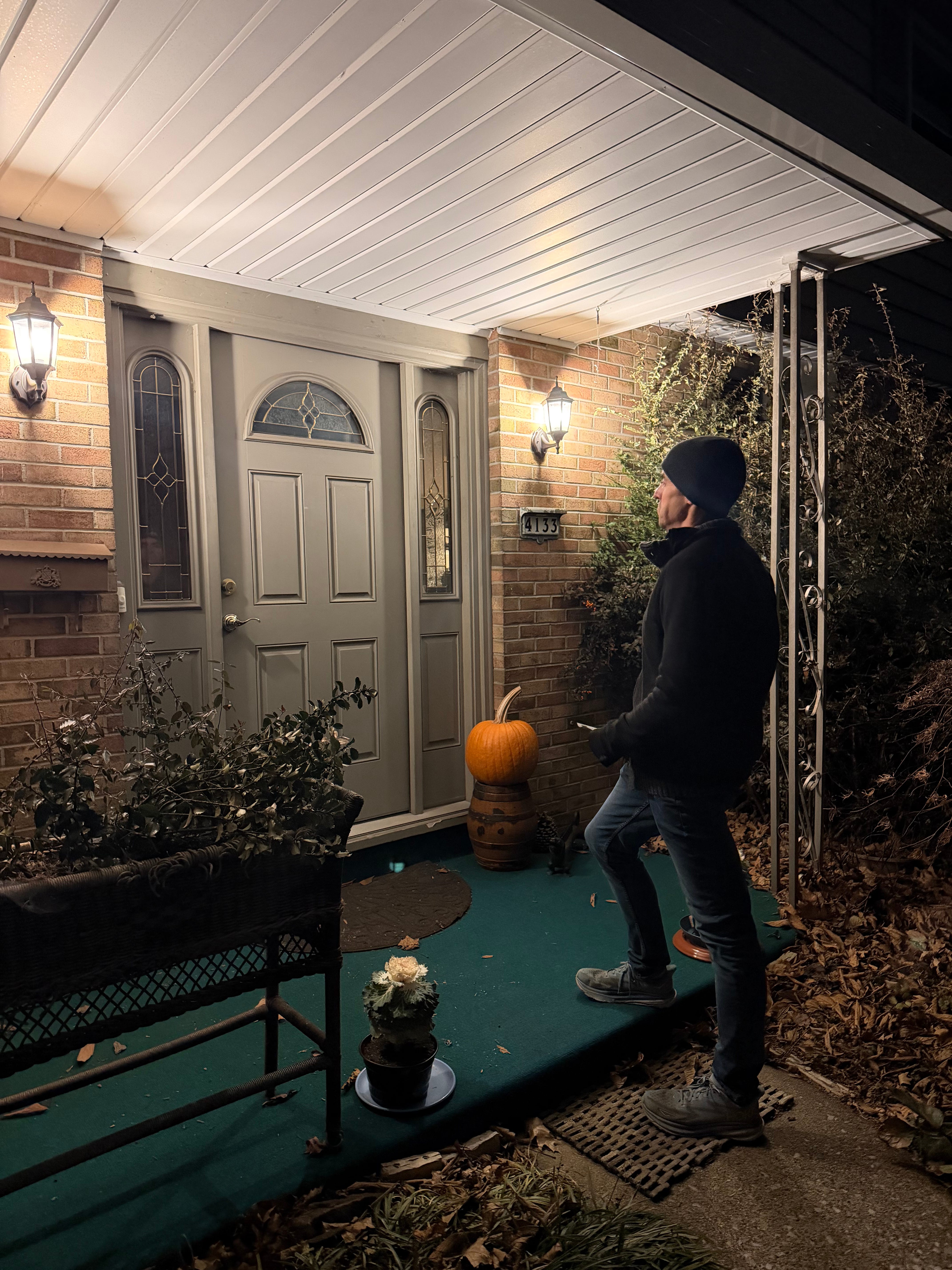
To Contrarian readers, Crosswell’s story will likely be familiar even if his name is not. Until February of last year, he was one of more than 30 attorneys in the Justice Department’s elite Public Integrity Section, the hub of DOJ’s anti-corruption efforts.
“My two biggest trials were supposed to be that year,” he tells me over beers at West End Tap Room, a craft beer bar in Allentown, Pennsylvania.
But on February 10, President Donald Trump’s DOJ ordered prosecutors to drop corruption cases against New York City Mayor Eric Adams. Soon after, many of the Public Integrity Section’s attorneys, including Crosswell, resigned.
“For the first time in my life, I quit a job and didn’t have something in line,” he says. He grew up in Pottsville, Pennsylvania, wrestling against high schools in the Lehigh Valley. In the last election, an election-denying Republican flipped a seat there by just one percentage point. Ryan began to make some calls. By late March, he’d moved to Allentown and begun his campaign.
“If some sort of justice can come out of this thing,” he says, “I wanted to run.”
For Bob Brooks, the call—or rather, calls—came a few months later.
“I had no interest in getting into politics,” he tells me, seated at the conference table in the Bethlehem office of the Pennsylvania Professional Fire Fighters Association, where he’s served as union president since 2021. Hardhats and fire-resistant jackets hang from the walls, framing an American flag.
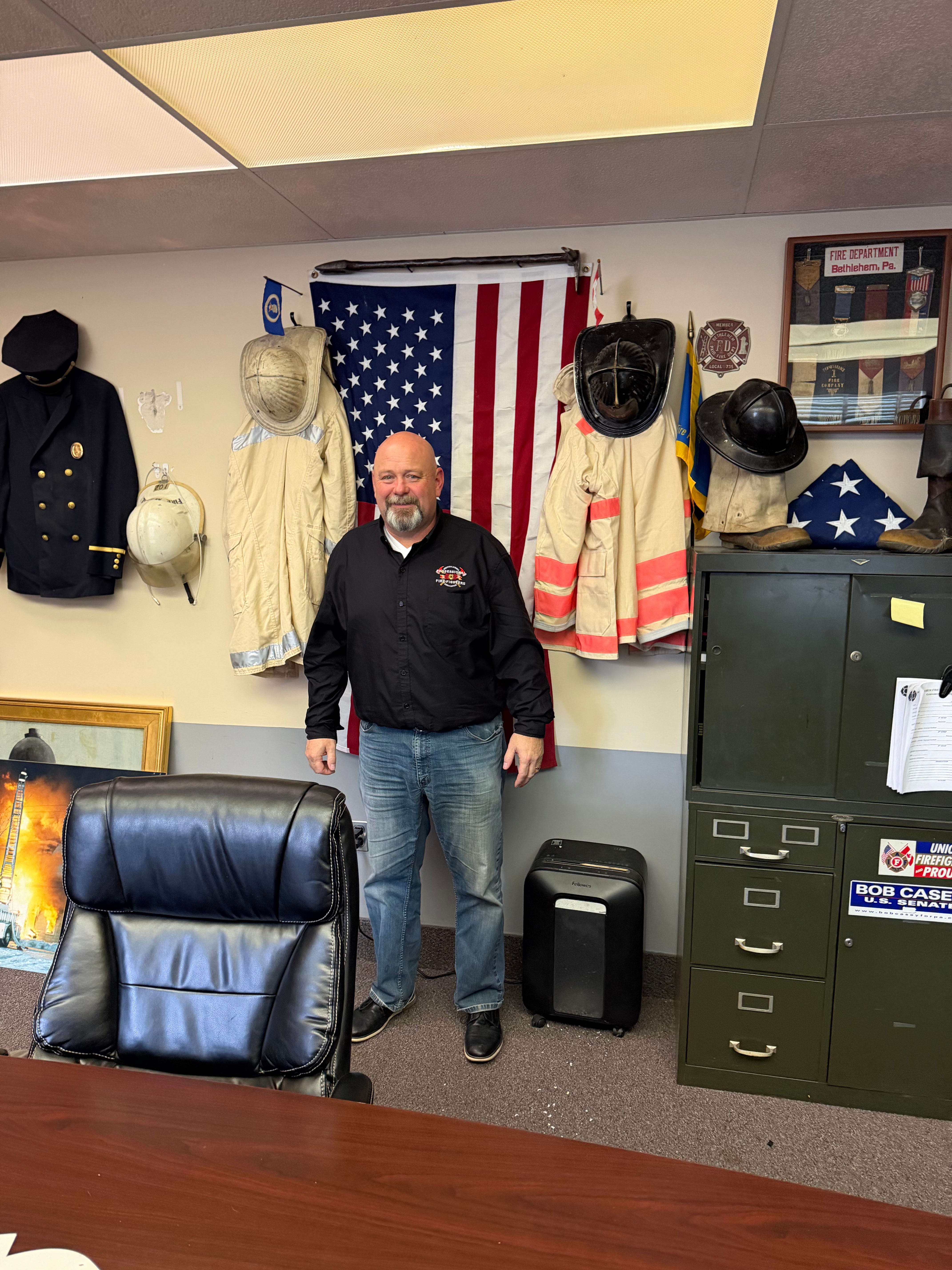
“Like, why? Why would I think about that?” he continues, as though I’d asked him about running an ultramarathon rather than running for Congress. “I have a great life. Things are good for me. I have a good job. I represent 8,000 of the best people in Pennsylvania.”
But last summer, he began getting recruited—first by political strategists who’d courted firefighters’ supports in past campaigns, then by Pittsburgh-area U.S. Rep. Chris Deluzio, and finally by Pennsylvania Gov. Josh Shapiro.
“I won’t say no, but I’ll take a look,” Brooks remembers telling them. “I saw what they were saying, and I still didn’t say no, and that’s when the wheels started turning.”
Today, by most insiders’ accounts, Brooks and Crosswell are the frontrunners in the PA-07 primary, one of four Republican-held Pennsylvania seats Democrats hope to flip this year. I spent Jan. 6 with them, hoping to better understand how the anniversary of the Capitol riot and Trump’s mass pardons of insurrectionists were playing with voters.
It turned out that, for the most part, they weren’t. For research purposes, and also for dinner purposes, I picked up pierogi at a Polish deli in downtown Bethlehem. Before heading to the firehouse to meet Brooks, I wandered around the area in search of coffee, and, later that night, I went door-to-door with Crosswell in Allenton’s Westwood Heights neighborhood. At no time—other than when I asked the candidates about it—did I hear anyone talk about Jan 6.
But though I learned relatively little about our collective memory of the day, I learned a lot about the Democratic primaries that will play out over the coming months. People who think about politics in purple America but don’t actually live there—i.e., people like me—are already starting to cast the internal fight within the Democratic party as a story of left versus center. My day in Pennsylvania’s 7th District convinced me that’s not at all the case.
So if we’re not headed for a clash of civilizations between socialism and centrism, what are we headed for? Here are three real fault lines—one big and two small—that I saw in the Lehigh Valley. Each represents a question Democrats will be trying to answer through the primary process. Whether we get the answers right could determine control of Congress this year—and the White House in 2028.
No Kings vs. Anti-Establishment
“Corruption, abuse of power, equality under the law, the rule of law. These are all kitchen table issues,” Crosswell tells me. True enough. But if it weren’t for Trump’s attacks on the rule of law, Crosswell wouldn’t be running, and a No-Kings appeal to fundamental American principles—along with the fear that we may lose our democracy for good—is at the heart of his campaign.
“When you’re a marine or a federal prosector, you feel like you’re protecting people from bullies, and that’s what America’s been. We’ve stood up for countries struggling against tyrants. We’ve been a force for democracy. To see that change is a really scary thing.”
When I ask Crosswell whether he thinks that appeals to democratic principles can win over the working-class voters who flipped the district to Trump, he recognizes that they fell flat last time. But he thinks the 2026 midterms will be different because people have now seen the consequences of authoritarianism in their own lives.
Brooks agrees that some 2024 Trump voters are winnable this time, but he has a very different approach to winning them—and to thinking about the election in general. “What I’ve learned is they just wanted to be talked to,” he says of fellow firefighters who left the Democratic Party. “They just wanted to be heard. And that’s what Donald Trump did. He pretended to listen to them.”
In his view, some of those Trump voters are disillusioned, but they’re not disillusioned only with Trump. They’re fed up with the entire political system—and he thinks he can speak to that. “I don’t think people like us get represented. I think Washington is broken.”
When Brooks talks about Jan. 6, his first instinct is to highlight the way the riots were an attack on law enforcement, rather than framing them first and foremost as an attack on the rule of law. “He pardoned everybody that was involved in that, even people that hurt police officers,” he tells me from across the conference table.
I suspect Crosswell agrees that working people have been left behind, just as I suspect Brooks agrees that the threat of authoritarianism is more serious than ever. But what candidates emphasize—and the way they frame their pitch to the voters we’ve lost over the last decade—will matter.
A Bigger Tent vs. Ready from Day One
Brooks already boasts endorsements from all kinds of national political figures—not just Shaprio, but also U.S. Rep. Jamie Raskin of Maryland, Sen. Chris Coons of Delaware, the Congressional Progressive Caucus PAC, and more.
One reason they might be so excited about him: If he’s elected, Brooks would be the one of the few male Democrats in Congress without a college degree. It’s not hard to imagine him as an in-demand surrogate during the 2028 campaign.
On the other hand, one local Democrat who’s backing Crosswell told me she felt frustrated by the national attention Brooks is getting. She said that though she understands the nationwide value of having someone like Brooks in the caucus, when it comes to her local representative, she’d rather support someone who already has a sense of how Washington works, and who, she thinks, would need less-on-the-job training after being sworn in.
Beard vs. No Beard
This might sound like a joke—and both candidates chuckle when I run the theory by them—but I think one of the biggest divides we may see in the 2026 primaries (at least those in which men are the only front-runners) is the division of candidates into “beard” and “no beard” lanes.
Brooks is in the former lane. He tells me that when he was fighting fires he faced restrictions on facial hair, so he stuck with a traditional mustache, which he later persuaded the fire chief to allow him to upgrade to a Fu Manchu. Now he sports a beard that’s full but short.
This might seem minor—no more meaningful than a candidate’s shoes or hair color—but a beard used to be what candidates grew after they lost a campaign, not when they were trying to win one. It suggests a departure from politics, or politicians, as usual. It’s also a non-toxic nod to traditional masculinity. It’s probably not a coincidence that Bob Brooks is being advised by the FIGHT Agency, a political strategy firm whose list of current and former clients includes Reuben Gallego, John Fetterman, Graham Platner, and Zohran Mamdani—four people who, despite having very different politics, are enthusiastic beard-havers.
Crosswell is clean-shaven—he points out that for many years, he was barred from having any facial hair because he served in the Marines. Even so, in today’s politics, the lack of a beard on a male candidate symbolizes a deeper lack of messiness and an aversion—at least in some cases—toward performing masculinity. Whether those are good or bad attributes will be up to the voters to decide, but it will be interesting to see which 2028 contenders grow out their facial hair as the next presidential election draws ever closer.
A former Obama speechwriter, David Litt’s latest book is “It’s Only Drowning.” He also writes the newsletter “Word Salad.”
 | A guest post by
|
I wish both candidates well and fervently hope the Democrats can take the House and Senate back. But it's ironic to hear that now men have to worry about how their looks affect how they are perceived. Women have been judged for their looks forever. How about we just listen to what candidates have to say instead.
I am so very glad that this is being brought out, that “..corruption, abuse of power, equality under the law, the rule of law. These are all kitchen table issues.” We are not just about grocery prices. We're about the price to be paid by allowing authoritarianism to run amok.