

Intimidating the Press
The arrests of Don Lemon and Gail Fort are part of the authoritarian playbook.

Every authoritarian, or wannabe authoritarian, tries to intimidate the press. A free press that informs people of abuses of power is a threat to the control the authoritarian wants to exercise. The past year has shown that Donald Trump thinks he has unconstrained power. In an interview published in December, White House Chief of Staff Susie Wiles said that Trump believes “there’s nothing he can’t do, nothing, zero.” It is therefore deeply disturbing but not surprising that Trump and those around him are following the authoritarian playbook and acting against the press in ways that we have not seen before in this country.
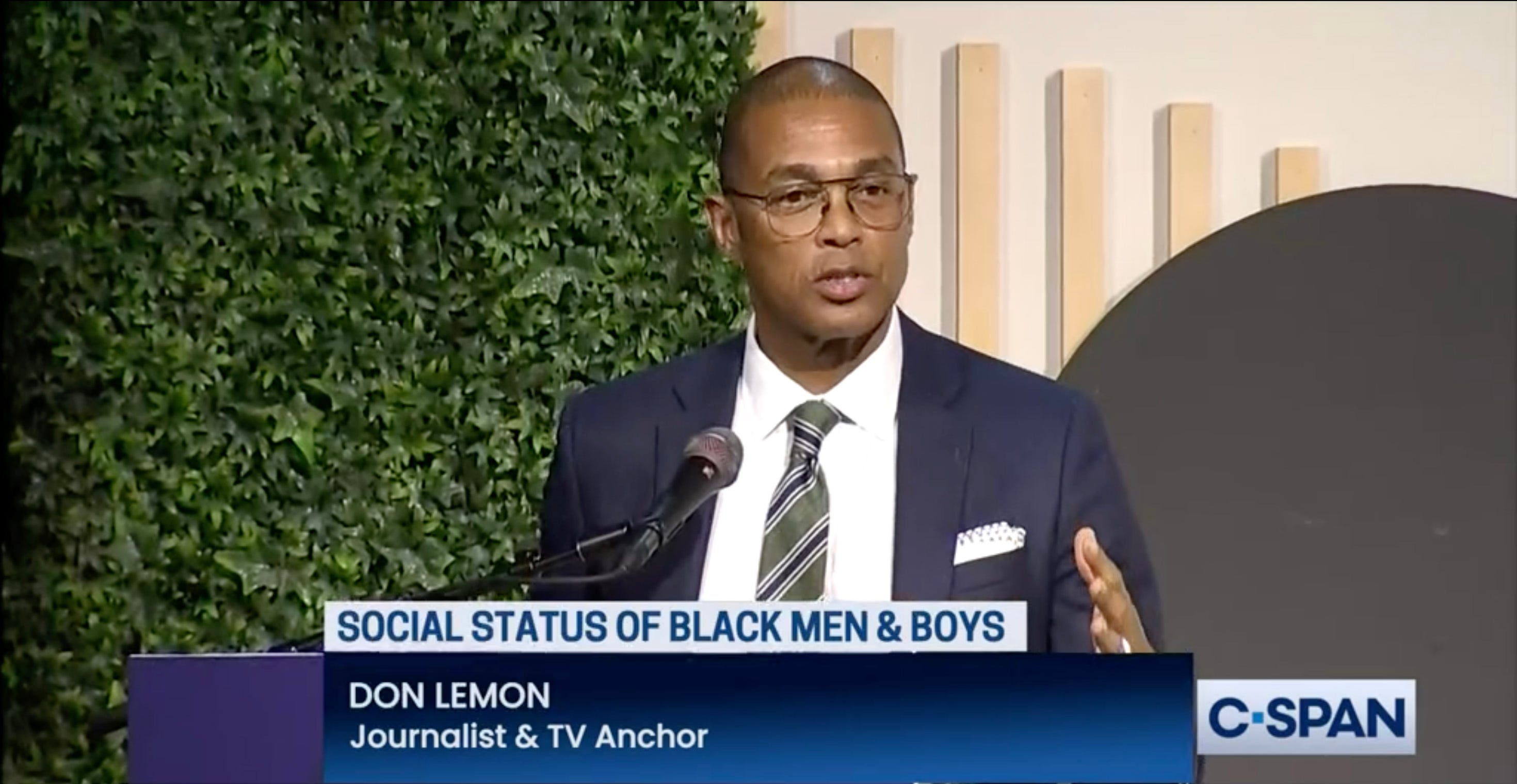
The indictment and arrest of reporters Don Lemon and Georgia Fort must be understood in this context, but this is only the latest example of Trump’s war against the press.
Trump has repeatedly filed frivolous suits against the media, which many have chosen to settle. For example, in December 2024, ABC News settled a defamation suit brought by Trump by giving $15 million to the Trump presidential foundation and paying $1 million to Trump in attorneys’ fees. Trump accused ABC news anchor George Stephanopoulos of defamation for saying Trump had raped E. Jean Carroll. But a federal district court had said the claim Trump raped Carroll was “substantially true.” It is highly unlikely that any court would have found that Trump could prove, as the law requires, that Stephanopoulos’s statement was false and that he acted with reckless disregard of the truth. ABC settled anyway.
In January 2025, Meta agreed to a $25 million settlement with Trump — with $22 million going to the Trump library and $3 million to pay his legal fees — for a lawsuit that was totally meritless. Trump sued Facebook and Instagram for an alleged First Amendment violation for barring him from those platforms after the Jan. 6, 2021, insurrection. Facebook and Instagram are private entities not bound by the First Amendment. Also, Section 230 of the Communications Decency Act provides that social media companies cannot be sued for their content moderation choices. But Meta paid Trump’s ransom rather than fight in court.
On July 1, Paramount Global announced it would pay $16 million to settle Trump’s lawsuit alleging that 60 Minutes had deceptively edited an interview with Vice President Kamala Harris to favor her during the 2024 presidential campaign. The First Amendment protects the discretion of news stations in how they present stories. But Paramount, which wanted Federal Communication Commission approval of its proposed $8.4 billion merger with Skydance Media, settled. On Tuesday, July 22, Trump claimed another $20 million could be forthcoming.
These lawsuits must be understood as efforts to intimidate the press. But lawsuits are not his only angle. Early in this Trump presidency, the Associated Press was banned from the White House because it continued to refer to the “Gulf of Mexico,” not Trump’s “Gulf of America.”
In September, the U.S. Department of Defense under Secretary Pete Hegseth introduced strict new, controversial rules for press, forcing journalists to sign a pledge to obtain authorization before publishing any information, even if unclassified. Every major news organization refused to sign and lost press privileges at the Pentagon.
After late-night comedian Jimmy Kimmel was briefly suspended for his comments following the assassination of Charlie Kirk, Trump said that broadcast stations critical of him should lose their licenses.
On Jan. 14, FBI agents searched the Virginia home of Washington Post reporter Hannah Natanson, seizing electronic devices as part of an investigation into a government contractor accused of mishandling classified material. Based on what is known, this clearly violates a federal law, the Privacy Protection Act of 1980, that restricts government officials from searching for or seizing a journalist’s “work product” or “documentary materials.” The law protects First Amendment activities by requiring law enforcement to use subpoenas rather than search warrants to obtain materials from newsrooms or journalists. The law does not apply if there is probable cause to believe the journalist has committed a crime, but it is not alleged that Natanson did so. The search of Natanson’s home and seizure of her computers was a blatant use of federal power to intimidate the press.
The indictment and arrest of Don Lemon and Georgia Fort must be understood in this context. Lemon and Fort attended a protest on Jan. 18 at Cities Church in St. Paul, Minn., where an Immigration and Customs Enforcement official serves as pastor. What did Lemon do? He live-streamed the event and peppered the pastor and those in attendance with questions. He did not participate in the anti-ICE chants, and there is no indication he engaged in behavior disruptive of the worship service. In other words, he was there as a reporter. Nor is there any indication that Fort, who also was present as a reporter, engaged in any disruptive activities.
After the incident, the federal government asked a magistrate judge to issue an arrest warrant for Lemon and Fort. The judge declined. The Justice Department then went to the federal court of appeals and asked it to order the judge issue the arrest warrant. It refused. The government then got a grand jury to indict Lemon, Fort, and others for whom the judge denied arrest warrants. Lemon and Fort were arrested on Friday. At each arrest, there were over 20 federal agents present, a show of force obviously meant to send a message to other reporters.
It is all a part of a concerted effort to intimidate the press. Hopefully, the courts will rule in favor of Natanson, Lemon, and Fort. But their vindication will not stop the next and then the next and then the next efforts by Trump and Attorney General Pam Bondi and Hegseth to use the enormous powers at their disposal against the media.
The Supreme Court deserves some of the blame here. It has refused to provide special protections for reporters and the press under the First Amendment. In 1972, the court ruled that reporters have no First Amendment right to keep secret their confidential sources. Indeed, there is still no federal law providing protection for reporters when compelled by a federal grand jury to name their sources. In 2024, a bill to do this finally passed the House of Representatives and did so unanimously. But after his election, Trump urged the Senate to reject it, and it followed his wishes. In 1978, the court refused to provide First Amendment protection for newsrooms against searches, which led Congress to adopt the Privacy Protection Act of 1980 that should have protected Natanson. On several occasions, the Supreme Court rejected claims of a need for press access to information to be able to inform the public.
All of this should make us very worried about freedom of the press when we need it more than ever. We need the media to show us the abuses of power and the illegal and unconstitutional acts by the Trump administration. We will never know the stories the press doesn’t pursue and doesn’t tell us in fear of reprisals from the federal government. This, of course, is exactly why the Trump administration is trying so hard to intimidate the press.
In spring 1954, at a Senate hearing on alleged communism in the Army, a Boston lawyer, Joseph Welch asked of Sen. Joseph McCarthy, “Until this moment, senator, I think I never really gauged your cruelty or your recklessness.... Have you no sense of decency?” The Lemon and Fort indictments and arrests are just the latest example that provides us an answer to this question about Donald Trump and his administration.
Erwin Chemerinsky is dean and Jesse H. Choper Distinguished Professor of Law at the University of California Berkeley School of Law.
 | A guest post by
|
It's also part of the narcissist's playbook. Trump can't take criticism, full stop. He just threatened Trevor Noah with a lawsuit for making a joke about him at the Grammy's. Note that when Trump "jokes," nobody bothers to sue him. They just shrug and find something better to do.
Of course, when directed at the press who aim to keep the electorate informed, the narcissist's power moves are much more dangerous. But when this jerk is gone, this country needs to have a serious discussion about the mental health of those who run for office and a means of testing and, if necessary, rejecting them as unfit. Because besides being a narcissist, which is often just an annoyance for others, Trump is a sociopath, and the two conditions mean that he will bring every cruelty to bear to avoid being embarrassed or miss out on getting every damn thing he wants.
Thank you for this chilling review of the state of the Press.
Shame on me for not knowing that Congress waited until 2024, almost 52 years after the Supreme Court ruling of 1972, to address the loss of protections for reporters and the press.
What happened? Why such inaction by Congress? Does Congress deserve some major shaming here?